Thermal Mass Flow Meter – Accurate Gas Flow Measurement for Industrial Applications
Introduction
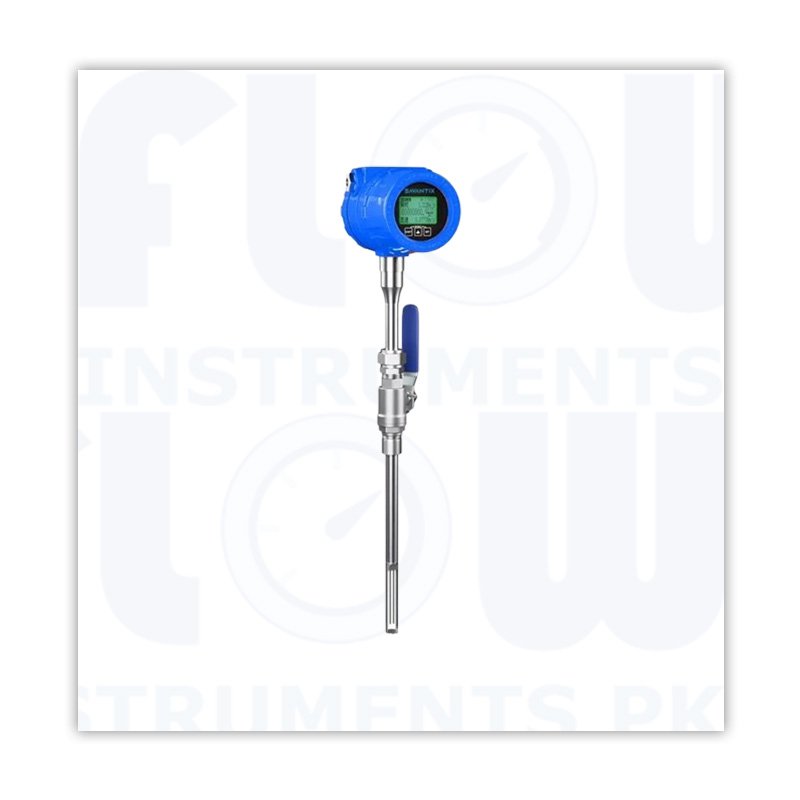
A Thermal Mass Flow Meter is one of the most reliable and efficient instruments used for measuring gas flow in industrial processes. Unlike traditional flow meters, thermal mass flow technology directly measures mass flow without requiring temperature or pressure compensation. This makes it an ideal solution for industries such as oil and gas, power generation, chemical processing, pharmaceuticals, wastewater treatment, and manufacturing.
What is a Thermal Mass Flow Meter?
A Thermal Mass Flow Meter is a device designed to measure the mass flow rate of gases based on the principle of heat transfer. The meter determines flow by measuring the amount of heat dissipated from a heated sensor into the flowing gas stream.
Unlike volumetric flow meters, thermal mass flow meters provide direct mass flow measurement, eliminating the need for additional compensation calculations.
Key Features
- Direct mass flow measurement
- High accuracy and repeatability
- No moving parts
- Low maintenance requirements
- Wide turndown ratio
- Suitable for low-flow gas applications
- Digital communication options available
How Does a Thermal Mass Flow Meter Work?
The operating principle relies on two temperature sensors:
- One sensor continuously measures the gas temperature.
- The second sensor is heated above the gas temperature.
- As gas flows across the heated sensor, heat is carried away.
- The amount of energy required to maintain the temperature difference is proportional to the gas mass flow rate.
Measurement Process
- Heat is applied to the sensor.
- Gas flow cools the sensor.
- Electronics calculate the cooling effect.
- Flow rate is displayed in real time.
This technology ensures highly accurate readings even when gas pressure or temperature fluctuates.
cools the sensor.
- Electronics calculate the cooling effect.
- Flow rate is displayed in real time.
This technology ensures highly accurate readings even when gas pressure or temperature fluctuates.
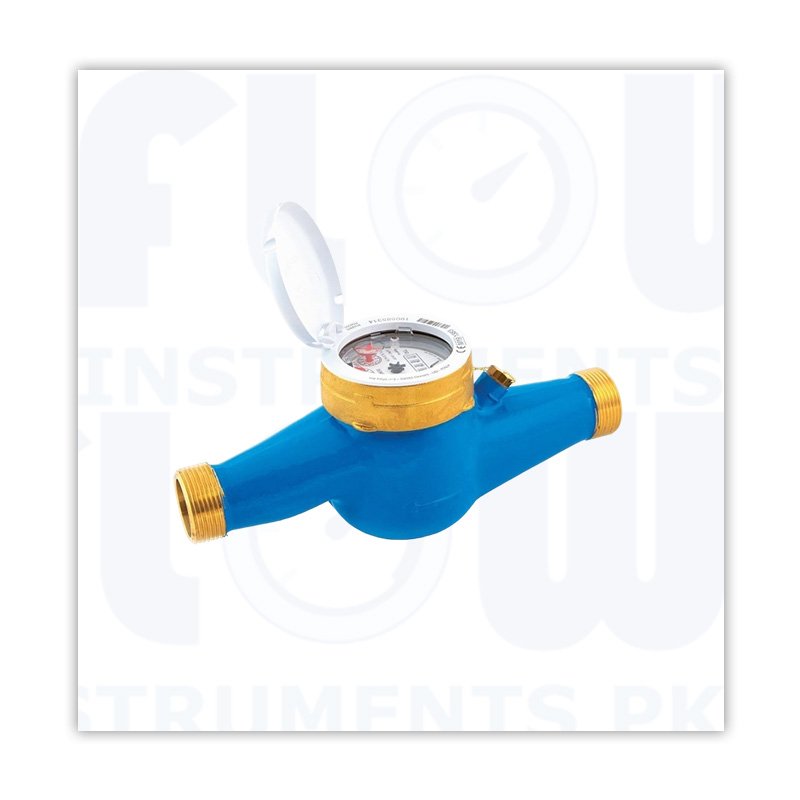
Jet Water Meter Work?
The operating principle is simple:
- Water enters the meter body through multiple inlet ports.
- Several jets strike the impeller simultaneously.
- The impeller rotates proportionally to water flow.
- The rotational movement is transferred to the register.
- The register displays total water consumption.
This multi-jet design minimizes wear and enhances measurement precision over time.
Benefits of Using a Thermal Mass Flow Meter
High Accuracy
Thermal mass flow meters typically achieve accuracy levels of ±1% of reading, making them ideal for critical process applications.
Direct Mass Flow Measurement
No need for external pressure or temperature compensation.
Low Maintenance
Since there are no moving mechanical parts, maintenance costs remain minimal.
Energy Efficiency
Monitoring compressed air and gas consumption helps industries identify leaks and reduce energy waste.
Wide Flow Range
Many models offer turndown ratios exceeding 100:1, allowing accurate measurement across varying flow conditions.

People Also Ask (FAQs)
1. What is a thermal mass flow meter used for?
A thermal mass flow meter is used to measure the mass flow rate of gases directly in applications such as compressed air monitoring, natural gas measurement, wastewater treatment, and industrial process control.
2. How accurate is a thermal mass flow meter?
Most high-quality thermal mass flow meters provide accuracy ranging from ±1% to ±2% of reading, depending on the application and calibration conditions.
3. Can thermal mass flow meters measure liquids?
Thermal mass flow meters are primarily designed for gases. Specialized versions exist for liquids, but most industrial thermal mass meters are optimized for gas flow measurement.
4. What are the advantages of thermal mass flow meters?
Key advantages include direct mass flow measurement, high accuracy, low maintenance, no moving parts, and reduced installation costs.
5. Do thermal mass flow meters require pressure compensation?
No. Thermal mass flow meters measure mass flow directly and generally do not require external pressure or temperature compensation.
6. Which industries commonly use thermal mass flow meters?
Industries such as oil and gas, chemical processing, pharmaceuticals, food and beverage, power generation, and wastewater treatment commonly use thermal mass flow meters.
Download Broucher
Flow Instruments PK is a dedicated flow measurement and process instrumentation, we specialize in supplying high-performance flow meters and industrial instrumentation solutions to a wide range of industries.
A Thermal Mass Flow Meter is a highly accurate and dependable solution for measuring gas flow across a wide range of industrial applications. Its ability to provide direct mass flow measurement, low maintenance requirements, and exceptional reliability makes it a preferred choice for modern process industries. Whether you’re monitoring compressed air systems, natural gas consumption, or industrial process gases, a thermal mass flow meter can significantly improve efficiency and reduce operational costs.